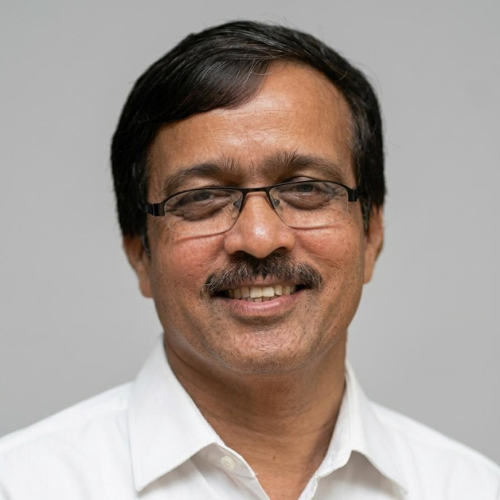
Sanjay Nahar
Founder President — Sarhad, Pune


Sarhad is a social, cultural, and educational organization dedicated to fostering unity and understanding among people from conflict-affected border regions. Founded by Shree Sanjay Nahar, the organization emerged from his deep commitment to bringing people and communities together.
Shree Nahar's mission began in the 1980s with the formation of Vande Mataram in Punjab. This initiative evolved into Sarhad in the 1990s when the organization expanded its outreach to the troubled regions of Jammu & Kashmir. Today, Sarhad is widely recognized by leaders in the social sector, government, and bureaucracy as a unique and impactful organization in India.
At the heart of Sarhad's mission lies a profound belief: children from strife-torn regions deserve the opportunity to build a better future. Sarhad works tirelessly to create opportunities for these children, believing that unity across caste, creed, and culture can resolve even the most complex issues when people come together with purpose and compassion.
Founder
Driven by a desire to do something constructive for the country, Sanjay Nahar took to social work very early in life.
The polarization of society on communal lines — threatening to weaken the very social fabric that holds the country together — disturbed the young Sanjay Nahar. He was convinced that the “Unity in Diversity” that is so unique a feature of India must be preserved through the integration of communities and religious tolerance. The young man had found the mission of his life: to work towards bonding people and communities together.
In 1984 he founded Vande Mataram, a social organization dedicated to national integration. Its activities began with a Peace March to Punjab, then at the peak of unrest. Around 1990, as Punjab cooled down, Jammu & Kashmir began experiencing militancy — and Sarhad, founded in the 1990s, took its work to the valley. The Zain-ul-Abideen Peace March and the annual Know India Tours for Kashmiri children became landmarks in building a bridge of humanity between Maharashtra and Jammu & Kashmir.
Four decades of working to bond people and communities together — across Punjab, Kashmir, the North East and beyond.
On 23rd March 1984, Sanjay Nahar founded Vande Mataram, a social organization dedicated to the cause of national integration, along with a few like-minded fellow young men. The formal beginning of working for the national cause coincided with Martyr's Day — the anniversary of the day the great freedom fighters Bhagat Singh, Sukhdev and Rajguru were hanged by the British. Pune, a hallowed place where many major national movements have begun, was once again the ideal incubator for Vande Mataram — especially significant against the backdrop of the severe violence that had gripped Punjab.
In 1984 the Punjab issue was at its peak. Vande Mataram commenced its activities with a Peace March to observe the situation first-hand. Sanjay Nahar and his colleagues kept visiting Punjab, establishing people-to-people contact and spreading the message of peace — 21 peace marches were organized in all. He facilitated peace talks between different streams of thought, a notable example being the meeting between Prof. Darshan Singh Raagi and Jain Muni Sushil Muni after the Rajiv–Longowal accord. His humanitarian work earned appreciation from eminent leaders including Amrita Pritam, J. F. Ribeiro, Prakash Singh Badal and three former Prime Ministers — Rajiv Gandhi, Chandra Shekhar and I. K. Gujral. His efforts proved pivotal in many youths abandoning militancy, even as he survived two attempts on his life.
Around 1990, as Punjab was cooling down, Jammu & Kashmir began experiencing militancy and related tensions. By now married, Sanjay Nahar travelled to Kashmir with his wife Sushma. That eventful visit opened a new chapter in his life. The Zain-ul-Abideen Peace March kicked off the work in Kashmir, and the Know India Tours for Kashmiri children became a regular annual event — showing them the peaceful, accommodative and tolerant side of India. He was instrumental in naming a chowk in the Katraj area of Pune as the Pune–Kashmir Friendship Chowk to celebrate the city's close ties with the valley.
Around 1987, prior to visiting Kashmir, Sanjay's attention was drawn to the North East, where the AGP agitation was in full swing. He established contact with AGP leader (and later Chief Minister of Assam) Prafulla Kumar Mahanta and began exploring ways to build bridges between people in that part of the country. Work in Kashmir engulfed him for more than two decades before he could refocus his attention on the North East.
In March 2012, Sanjay Nahar visited Pakistan as a member of a peace delegation led by veteran journalist Kuldip Nayyar. His public speeches were well received by journalists and people in Pakistan. He met the then Pakistani Prime Minister Yusuf Raza Gilani, along with Sherry Rehman and other dignitaries.
Having worked closely with people and authorities in the border states of Punjab and J&K, Sanjay Nahar founded Sarhad in 1995 — a social organization dedicated to work in the border areas. That small sapling has grown into a large tree: Sarhad School and Sarhad College of Arts, Commerce & Science at Katraj, Pune educate more than 150 Kashmiri children, with all lodging and boarding expenses borne by Sarhad without any government or foreign help. From 2013–14, 100 students from the North East are also admitted with full support. Its many initiatives include the annual Kashmir Festival in Pune, the Sant Namdev National Award, the Bhagwan Mahavir International Award for Peace & Understanding, the Bhupen Hazarika Award, the Sarhad Research Centre for Management of Conflict Resolution & Peace, the Dr. Raghunath Mashelkar Science Lab, the Navalmal Firodia Computer Lab, and Chinar Publishers. A World Music University to promote peace through music is also planned.
Promoting peace through art, literature, music, dialogue, and community engagement — programs that strengthen social harmony and celebrate India's cultural diversity.
Organizing national literary conferences like the Akhil Bharatiya Marathi Sahitya Sammelan to celebrate diverse languages and regional literature.
Hosting exhibitions with artists from Kashmir, the Northeast, and across India to promote expression and healing.
Bringing together musicians from conflict zones for peace concerts and fusion performances.
Facilitating cultural exchange platforms between Kashmir, Maharashtra, Punjab, and the Northeast.
Instituting national awards like the Bharat Ratna Bhupen Hazarika Award for peace advocates.
Organizing creative competitions like drawing, singing, and folk dance for children from border areas.
The trustees and leadership guiding Sarhad's work across India's border regions.
Founder President — Sarhad, Pune
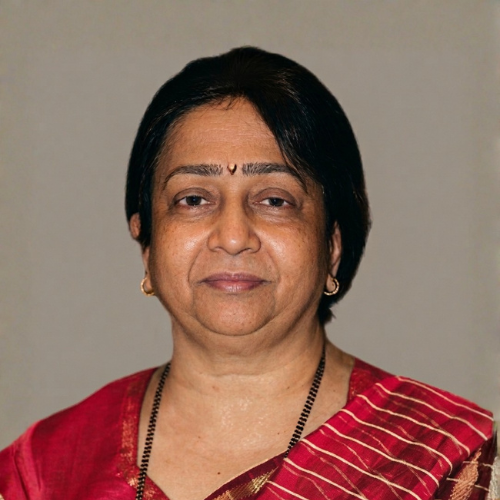
CEO — Sarhad, Pune

Trustee — Sarhad, Pune
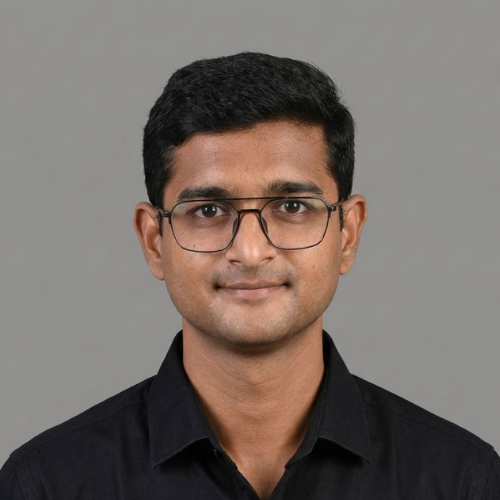
Trustee — Sarhad, Pune